
If your property isn’t connected to the mains sewer, managing your own wastewater is more than practicality; it’s a legal responsibility. And for many homeowners, it raises a question that’s more confusing than it should be: what’s the actual difference between a septic tank and a sewage treatment plant?
It’s an easy thing to get muddled. The two systems are often lumped together, and on the surface, they seem to do the same job. But they work in very different ways, and the rules around them differ too. Understanding the difference between septic tank and sewage treatment plant systems can save you from making a costly mistake – whether you’re maintaining an existing system or looking at installing something new.
What Is a Septic Tank?
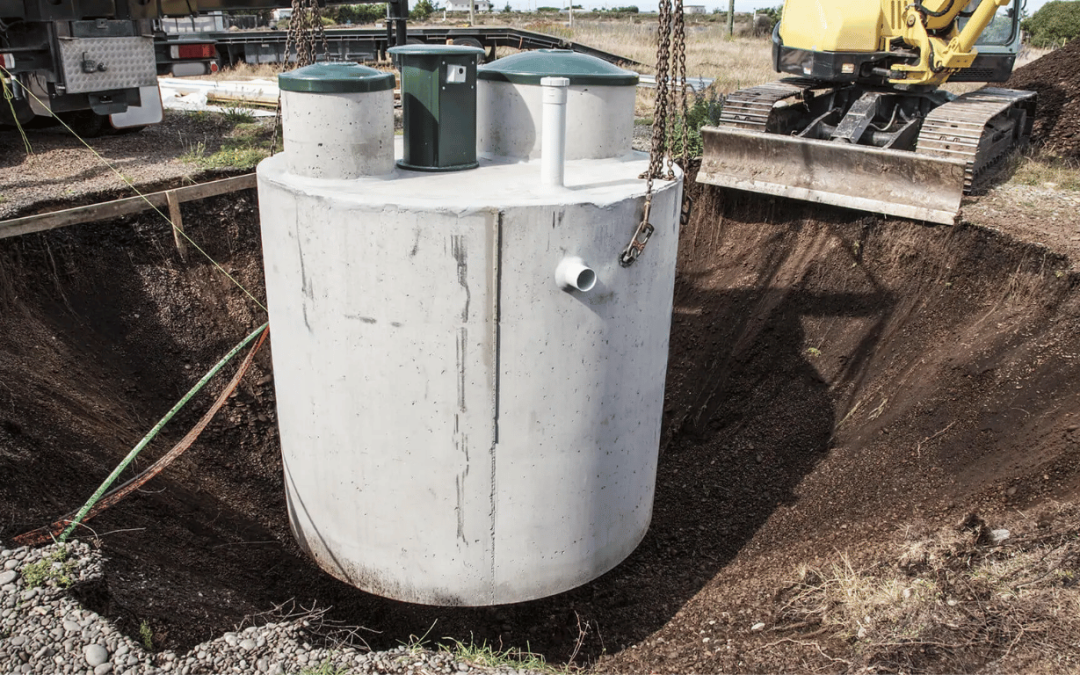
A septic tank is an underground tank, usually concrete or plastic, that collects and partially processes wastewater from your home. Most are two-chambered. Waste enters the first chamber, where gravity does the heavy lifting. Solids sink to the bottom and form sludge. Lighter material, like grease, floats to the surface. The liquid in the middle (effluent) flows into the second chamber, then out of the tank entirely.
That effluent isn’t clean. It needs further treatment, which is why a septic tank must always discharge into a drainage field, or soakaway. There, the liquid filters slowly through the soil, and naturally occurring bacteria break down any remaining waste.
Upkeep and Maintenance
There are no mechanical components in a septic tank, so no electricity supply is needed. While simple in design, they require regular emptying by a registered waste carrier. A standard 1,000-gallon septic tank will typically need emptying once a year, though this varies depending on household size and how much wastewater the property produces.
What Is a Sewage Treatment Plant?
A sewage treatment plant (sometimes called a package treatment plant) goes several steps further. It processes wastewater through a multi-stage system that produces a significantly cleaner effluent than a septic tank alone can manage. Here’s how the process works.
Primary Settlement
Wastewater enters the first chamber, where solids settle to the bottom as sludge. This stage is broadly similar to how a septic tank operates.
Aeration
The liquid then moves into a second chamber, where air is pumped into the system. This encourages aerobic bacteria to grow and actively break down the organic matter in the wastewater – a process that dramatically improves the quality of the effluent.
Final Settlement
The treated liquid flows into a final chamber, where any remaining solids settle out. The clean effluent is then discharged, either into a drainage field or, because of the treatment it’s undergone, directly into a watercourse such as a stream or ditch. The latter is subject to the correct environmental permits.
Because of the aeration stage, sewage treatment plants need a constant electricity supply. They also have more moving parts, which means more potential for wear and tear and a greater need for regular servicing.
Septic Tank vs Sewage Treatment Plant: The Key Difference
To put it simply, a septic tank separates waste, while a sewage treatment plant actively treats it. That distinction matters more than it might seem. The effluent from a sewage treatment plant is substantially more purified, making it far less harmful to the surrounding environment. This is why treatment plants have more discharge options available – and why the regulations around each system differ.
Wastewater System Comparison UK: Overview
Septic Tank
- Uses gravity to separate solids and liquids; no electricity needed
- Discharge must go to a drainage field; direct discharge to watercourses is not permitted
- Lower initial cost, but requires more space for a drainage field
- Needs emptying roughly every 6–12 months, depending on the tank
- Simpler system with fewer components to maintain
Sewage Treatment Plant
- Uses a staged process, including aeration, to actively treat wastewater
- Can discharge to a drainage field or directly to a watercourse (with appropriate consent)
- Higher upfront cost, and requires an electrical connection
- Generally needs emptying less frequently
- Requires more regular servicing due to mechanical components
Which System Do You Need?
There’s no universal answer when it comes to the septic vs treatment system debate. The right choice depends on your site, your soil conditions, the space you have available, and whether there’s a watercourse nearby. That said, a few practical rules of thumb are worth knowing.
A septic tank could be the right fit if you already have a functioning drainage field that meets current building regulations, and your existing system doesn’t discharge to a watercourse. In that case, upgrading may not be immediately necessary. Though a professional inspection is always a sensible step to confirm everything is compliant.
A sewage treatment plant is likely the better option if your existing septic tank drains into a ditch or stream, or if you’re installing a brand new system and a drainage field simply isn’t viable at your property.
One thing worth stressing, regardless of which route you take: size any new system for the maximum occupancy of the property, not just the number of people currently living there. Under-sizing now almost always means costly upgrades down the line.
What Are the Legal Requirements?
Anyone responsible for a septic tank or sewage treatment plant must comply with the general binding rules set out by the Environment Agency. These cover how and where your system discharges, as well as minimum distances from boundaries and water sources.
Under these rules, a septic tank cannot discharge directly into a ditch, stream, or any other watercourse. Discharge must go to a drainage field or, in some cases, a public sewer. This is one of the main reasons sewage treatment plants are the more practical choice for many properties – particularly those near open water.
If your system meets all the general binding rules, you won’t need a permit. If it doesn’t, your options are typically to:
- Connect to the public sewer
- Upgrade or relocate your system
- Apply to the Environment Agency for an environmental permit covering the discharge.
Not sure whether your current system is compliant? A professional inspection is the clearest way to find out.
How Can Canford Drains Help?
Whether you have an existing septic tank that needs attention or you simply want straightforward advice on managing your off-mains drainage, the team at Canford Drains is here to help. We serve homeowners and businesses across Bournemouth, Poole, Dorset, and the surrounding areas – and we understand the drainage challenges that come with rural and semi-rural properties in this part of the country.
We offer professional septic tank emptying, regular maintenance contracts, and thorough inspections to keep your system running safely and legally. All of our work is carried out by qualified drainage engineers at competitive rates, and you can get a free no-obligation quote before any work begins, so there are no surprises.
Got a question or need some advice? Contact our friendly team today; we’re on standby 24 hours a day.