
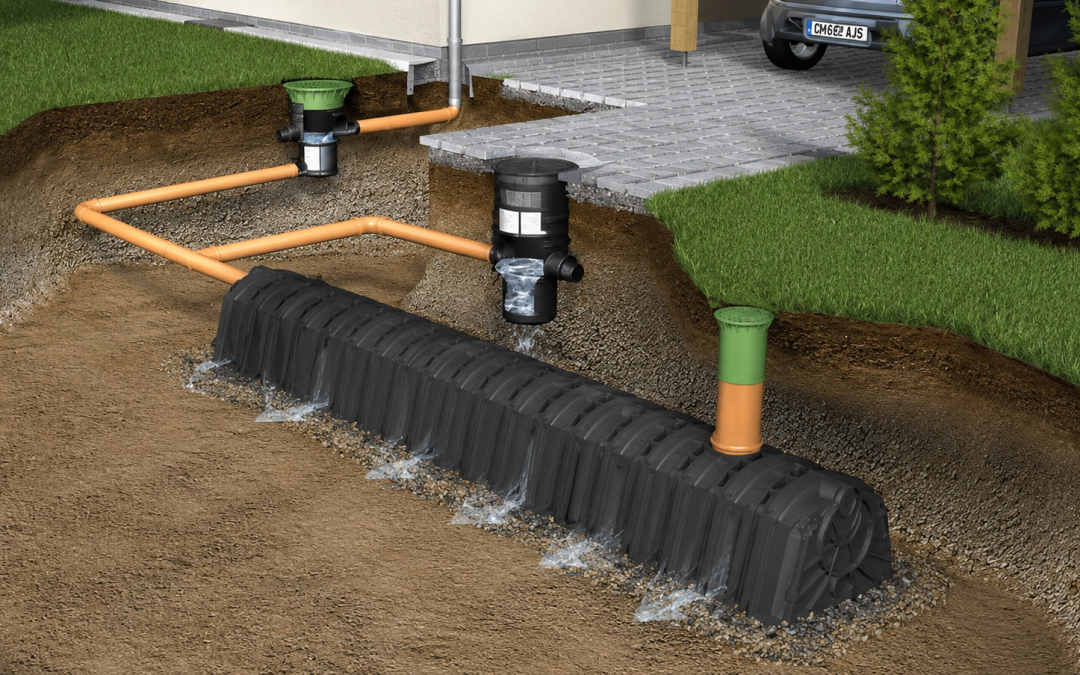
If you’ve noticed water pooling across your garden, persistent damp near your property, or soggy patches of lawn that never seem to dry out, there’s a good chance your surface water drainage needs attention. Soakaways are one of the most effective and widely used solutions for managing excess rainwater, particularly for rural properties or homes without a mains surface water sewer connection.
Below, we explain what soakaways are, how they work, the signs that yours might be failing, and what to consider when it comes to installation, maintenance and regulations.
What Is a Soakaway?
A soakaway is an underground drainage system designed to collect excess rainwater and allow it to disperse gradually into the surrounding soil. Rather than letting water sit on the surface and cause waterlogging or flooding, a soakaway channels it below ground, where it can percolate naturally at a controlled rate.
They’re commonly used to manage runoff from:
- Roof guttering and downpipes – directing rainwater away from your property’s foundations to prevent damp and structural issues.
- Driveways and patios – hard surfaces that don’t absorb water naturally and can cause pooling during heavy rainfall.
- Lawns and gardens – areas prone to waterlogging where standing water makes the space unusable.
When installed correctly, a soakaway can protect your property from flooding, reduce strain on existing drainage systems, and keep your garden in good condition throughout the year.
How Does a Soakaway Work?
A typical soakaway system consists of a few key components working together. At its core is either a series of perforated crates or a rubble-filled pit, buried underground. Inflow pipes connect to your existing rainwater drainage, directing water into the soakaway. A geotextile membrane wraps the crates, preventing silt and debris from entering while still allowing water to pass through. The surrounding area is then backfilled with shingle and topsoil.
Rainwater enters through the pipework and fills the crate system, which holds a large void of empty space. From there, water gradually seeps through the membrane and into the surrounding soil. This slow, controlled release prevents the sudden surface pooling that causes waterlogged gardens and overwhelmed drains.
It’s worth noting that soakaways are strictly for rainwater and surface water. Discharging sewage into a soakaway is illegal and will lead to blockages and contamination. Properties that rely on septic tanks have a separate drainage field to handle wastewater, which works on a similar principle but serves a different purpose entirely.
Signs You Might Need a Soakaway
Several warning signs suggest your property could benefit from a soakaway, or that an existing one may be failing:
- Standing water on your lawn or driveway – if puddles persist long after rainfall has stopped, surface water isn’t draining as it should.
- Waterlogged or soggy patches of garden – ground that stays saturated indicates poor drainage below the surface.
- Slow-draining gutters or gullies – when water has nowhere to go, it backs up through the system.
- Localised flooding after heavy rain – even moderate rainfall shouldn’t cause flooding on a well-drained property.
- Foul odours near an existing soakaway – this can indicate a blockage or failure within the system.
If you’re experiencing any of these issues, a professional assessment can determine whether a new soakaway is needed or whether your current system requires repair.
Does Soil Type Matter?
Soil type plays a significant role in whether a soakaway will work effectively on your property. Free-draining soils, such as sandy or loamy ground, allow water to percolate steadily and are ideal for soakaway systems. Clay-heavy soils, on the other hand, drain poorly and can prevent water from dispersing, rendering a soakaway ineffective.
A percolation test measures how quickly water drains through your soil. This involves digging a test hole, filling it with water, and recording the rate at which the water level drops. The results determine whether a soakaway is suitable for your site and help calculate the correct size for the system. Without this step, there’s a real risk of installing a system that simply doesn’t function as intended.
Do You Need Planning Permission for a Soakaway?
Most domestic soakaway installations fall under permitted development, so you won’t usually need formal planning permission. However, this can depend on your property’s location, local ground conditions, and whether the site falls within a flood risk zone or protected area. It’s always sensible to check local planning regulations before starting any work, and any installation should comply with current Building Regulations and Environment Agency guidance.
How Long Do Soakaways Last?
A professionally installed soakaway can last between 20 and 30 years, sometimes longer with proper care. Over time, however, silt, debris and root intrusion can reduce performance. Factors that shorten a soakaway’s lifespan include poor initial installation, increased water usage beyond the system’s design capacity, and a lack of ongoing maintenance.
Soakaway Maintenance
The biggest maintenance concern with any soakaway is blockages. Once a soakaway crate system becomes clogged, it generally can’t be unblocked, which is why prevention matters. Adding a silt trap to your drainage run catches debris before it reaches the crates, significantly extending the life of the system. Keeping gutters and gullies clear also helps reduce the amount of silt entering the soakaway in the first place.
If your soakaway is showing signs of failure, a professional assessment can identify the problem and determine whether a repair, a partial replacement, or a completely new installation is the best course of action.
What’s the Difference Between a Soakaway and a Septic Tank Drainage Field?
Although both systems involve dispersing liquid into the ground, they serve different purposes. A soakaway handles rainwater and surface water, while a septic tank drainage field (also called a soakaway field) deals with partially treated wastewater from a septic tank. The drainage field uses perforated pipes in gravel-filled trenches, relying on the soil to perform secondary biological treatment of the effluent. The two systems shouldn’t be confused, and they must never be combined.
Soakaway Services From Canford Drains
Dealing with waterlogged gardens, standing water, or a soakaway that’s seen better days can be frustrating, but you don’t have to figure it out alone. Canford Drains is a local, family-run company with over 25 years of experience serving homeowners and businesses across Southampton and Dorset.
Our team specialises in soakaway repair, maintenance, replacement and installation, using industrial pressure washers to clear blockages and providing thorough assessments to recommend the right solution for your property.
Our drainage engineers are on standby 24/7, 365 days a year, and we use the most up-to-date equipment to diagnose and fix all types of drainage issues. There are no call-out fees, and we offer free, no-obligation quotes at competitive rates — you’ll only ever pay for the work that’s needed. Contact our friendly team today and we’ll help get your drainage working as it should.