
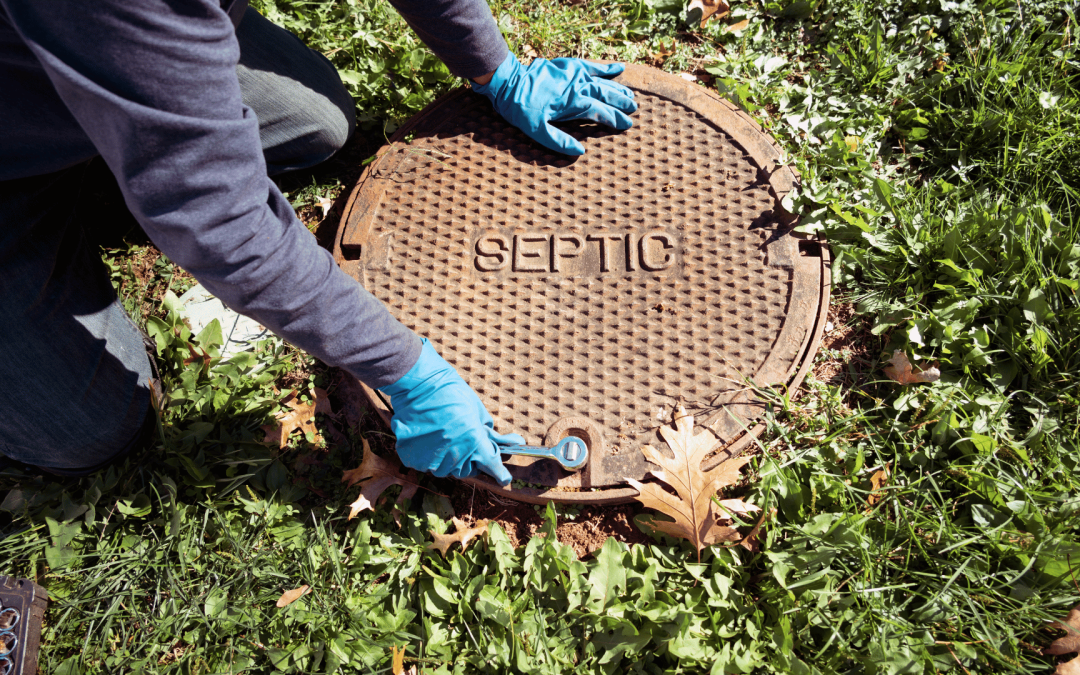
Many properties across rural Dorset aren’t connected to the mains drainage system, relying instead on private systems like septic tanks to manage wastewater. These systems are effective and long-lasting, but only when they receive the regular attention they need.
We cover how septic tanks work, the warning signs to look out for, your legal responsibilities and how to keep everything running smoothly.
How Does a Septic Tank Work?
A septic tank is an underground chamber connected to your property by a series of drains. It collects foul wastewater and provides a basic level of treatment. Solid waste settles at the bottom as sludge, while lighter materials like grease float to the surface. The liquid effluent between these layers flows out into a soakaway, where it gradually disperses into the surrounding ground.
Soakaways need to be carefully constructed to ensure that liquid waste doesn’t contaminate the ground surface, nearby ditches or watercourses. When both the tank and soakaway are functioning correctly, the system works quietly and efficiently in the background for years.
Why Is Regular Maintenance So Important?
Without routine emptying and inspection, sludge builds up and reduces the tank’s capacity. This forces solids into the soakaway, leading to blockages, waterlogging and potentially costly system failure.
Regular professional servicing doesn’t just keep things flowing – it also gives engineers the chance to spot developing issues before they escalate into expensive problems.
What Are the Warning Signs to Watch For?
Knowing when your septic tank needs attention can save you from dealing with a far bigger issue down the line. Common signs include:
- Slow-draining sinks, showers or toilets. This often indicates the tank is approaching capacity or a blockage is forming.
- Foul odours near the tank or inside the property. Persistent sewage smells suggest waste isn’t being processed properly.
- Pooling water around the tank or soakaway. When the system is overwhelmed, effluent can be forced to the surface.
- Unusually lush grass above the tank or drain field. This can signal a leak, with nutrient-rich wastewater feeding the soil.
- Sewage backing up through internal drains. This requires immediate professional attention.
What Are Your Legal Responsibilities?
Responsibility for emptying and maintaining a private septic tank rests with the property owner. Under the General Binding Rules introduced in 2020, you’re required to ensure your tank is desludged before it reaches capacity, and any company carrying out the work must be a registered waste carrier.
Your system must also not discharge directly into watercourses such as rivers, streams or ditches. If it does, it may need upgrading to meet current Environment Agency regulations. For properties with soakaways, any new installations or improvements also require prior consent from the Environment Agency.
What About Cesspools?
Unlike septic tanks, a cesspool is a fully sealed tank with no outlet. It simply collects wastewater until it’s full and then requires emptying by tanker. Cesspools fill up much faster than septic tanks and need more frequent servicing, making them a more demanding option for property owners.
Keep Your Septic System in Working Order With Canford Drains
Canford Drains is a family-run company with over 25 years of experience serving homeowners and businesses across Bournemouth, Poole and the wider Dorset area. Our engineers carry out professional septic tank emptying, inspections and tailored maintenance contracts, so you’ll never need to worry about missing a service.
We’re on standby 24/7, 365 days a year, and we never charge a call-out fee – you’ll only pay for the work that’s needed. Get in touch today for a free, no-obligation quote and let our friendly team help keep your drainage system running as it should